
Introduction to Brian Head’s Story
Brian Head history is a story of transformation, adventure, and community in the high mountains of southern Utah.
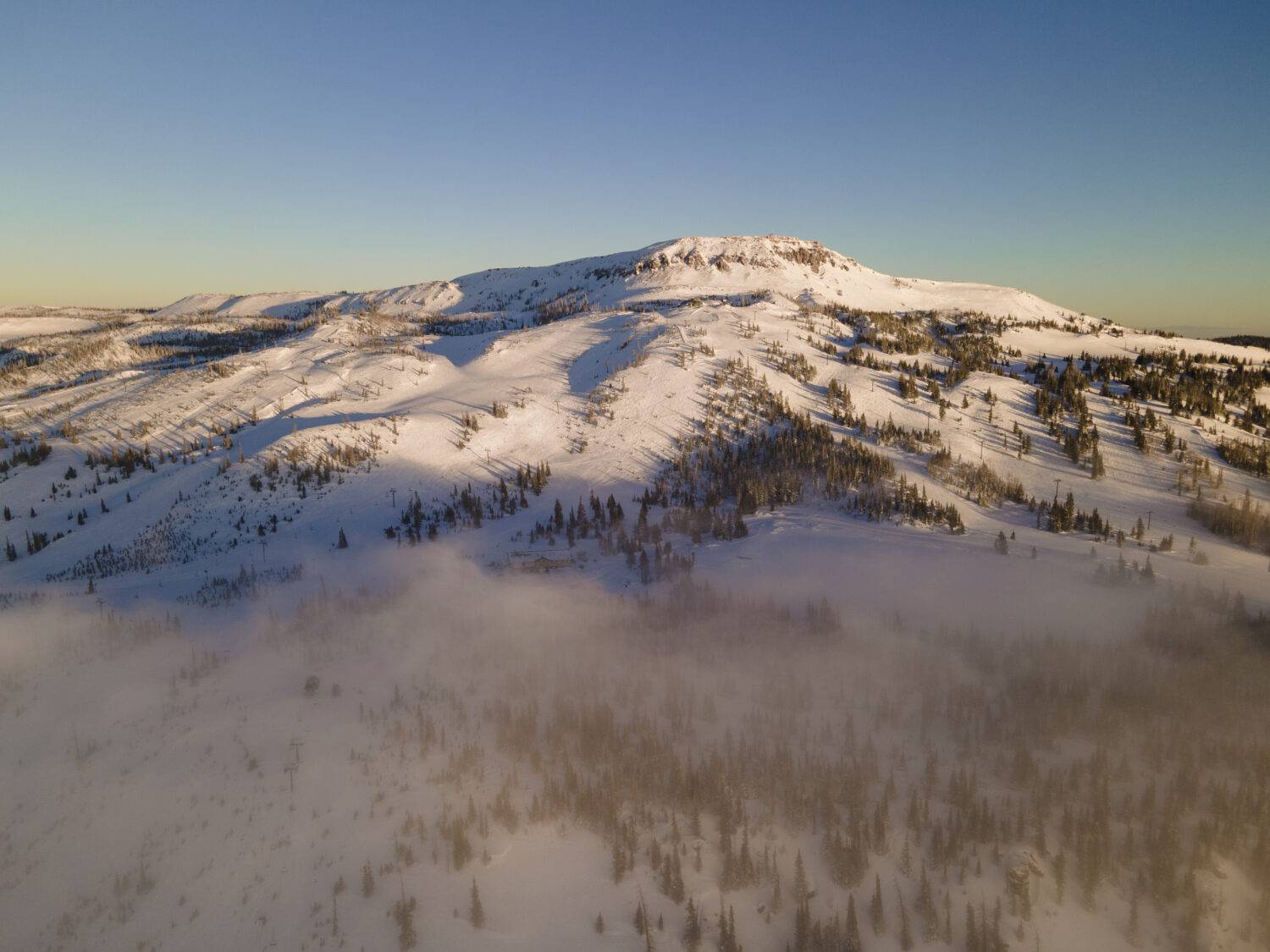
Perched at 9,600 feet above sea level in the mountains of southern Utah, Brian Head stands as one of the most unique ski destinations in the American West.
Brian Head is located in southwestern Utah at 9,800 feet, making it the state’s highest town. As a Utah resort, Brian Head is renowned for its high elevation, distinctive landscape, and its special place among Utah ski destinations.
This guide is for travelers, history enthusiasts, and anyone curious about how Brian Head became a beloved ski destination.
We cover Brian Head’s journey from Indigenous lands to modern ski resort, highlighting key historical milestones, community development, and lodging evolution.
This high-elevation town and its beloved ski resort didn’t spring up overnight—it evolved over centuries from Indigenous hunting grounds to pioneer grazing land to the family-friendly mountain escape visitors know today.
Understanding this history adds depth to every run down the slopes and every evening spent in a cozy mountain cabin.
At Brian Head Hotels, we help travelers discover the perfect accommodations—from slope-side hotels to luxury vacation rentals—while also sharing the rich backstory that makes this place special.
The area was first discovered by the Fremont Tribe and was originally known as Monument Peak and Bear Flats.
Whether you’re planning a winter ski trip or a summer escape from the desert heat, knowing Brian Head’s past helps you appreciate what makes this mountain community so distinctive.
In the pages that follow, we’ll explore the Indigenous peoples who first walked these high meadows, the Irish ranchers who gave the area its “Little Ireland” nickname, the visionary developers who built Utah’s southernmost ski resort in the 1960s, and the modern resort that welcomes families from Las Vegas, southern California, and beyond.
Brian Head was incorporated into Dixie National Park around 1906.
Book Now
Ancient Footsteps and Early Settlement (Pre-1900)
Brian Head’s story begins long before the first ski lift ever turned, with Indigenous peoples traversing these high plateaus for thousands of years. Brian Head was originally known as Monument Peak and Bear Flats.
The mountain meadows surrounding present-day Brian Head served as seasonal hunting and gathering grounds for Native peoples, including those of the Fremont culture who inhabited the region centuries before European contact.
These early visitors understood what later settlers would discover—that the high elevation offered cool mountain air, abundant wildlife, and stunning vistas stretching toward what we now call Cedar Breaks National Monument.
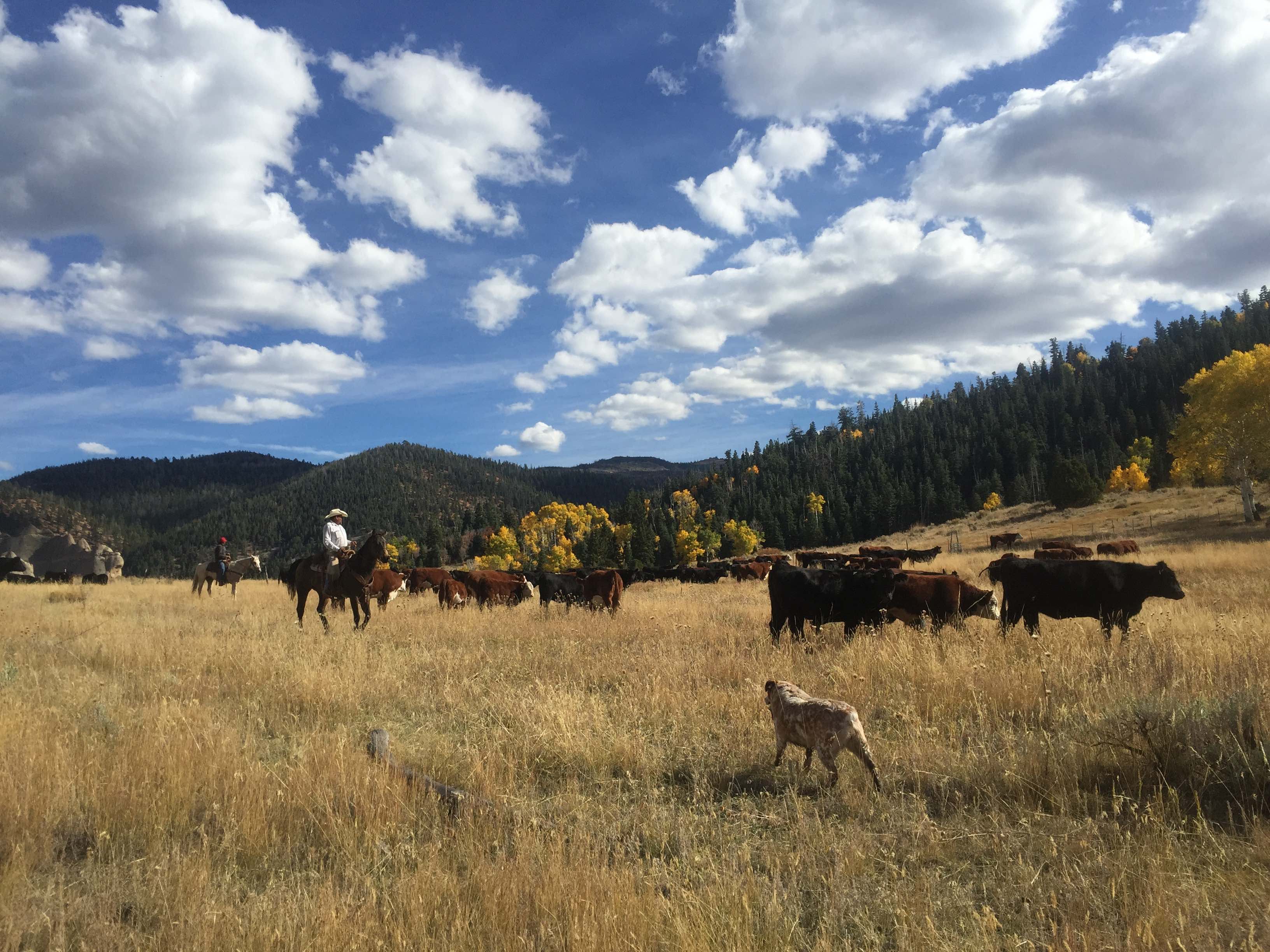
Euro-American settlement arrived in the mid-1800s when pioneers from nearby Parowan and other Iron County communities began using the high country as summer grazing range. The Adams family, settlers of Irish heritage, established particularly strong ties to the area.
Their sheep, cattle, and horses roamed the meadows each summer, and the family’s presence was so prominent that locals began calling the region “Little Ireland”—a nod to the Adams clan’s origins across the Atlantic.
During this era, early maps and records referred to the prominent peak as Monument Peak, a name that would eventually give way to the “Brian Head” designation we know today.
The rugged plateau served primarily utilitarian purposes: ranchers escaped the desert heat below, livestock fattened on mountain grasses, and small-scale logging operations supplied timber to growing communities in Iron County.
How Brian Head Got Its Name
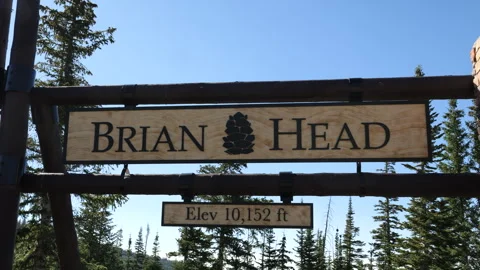
Few questions spark more debate among local history buffs than the origin of the “Brian Head” name.
The name ‘Brian Head’ is believed to have been derived from several theories, including a tribute to William Jennings Bryan or a man named Bryan who built a monument on the peak.
The truth is, even historians aren’t entirely certain how this spelling became official.
One popular theory connects the name to William Jennings Bryan, the three-time Democratic presidential candidate and legendary orator who captivated American audiences in the late 19th and early 20th centuries.
Some locals believe that surveyors or settlers named the peak in his honor, with the spelling later shifting from “Bryan” to “Brian” over time.
An alternative explanation points to the U.S. Geographical Survey Office and the western expeditions led by famous explorer John Wesley Powell.
According to this theory, a surveyor named Bryan—possibly one of the expedition leaders working with explorer John Wesley Powell during his mapping of the Colorado Plateau—lent his name to the peak.
Records from this era are spotty, and the exact connection remains unconfirmed.
What we do know is that both the town of Brian Head and Brian Head Peak officially use the “Brian” spelling today.
Utah place-name references and the state’s History to Go archives confirm this standardization, even if the original inspiration remains a matter of friendly local debate.
Fun fact: Some longtime residents still argue about whether the peak was named for a person, a corruption of another word entirely, or simply a surveyor’s creative choice during an afternoon of mapping.
Dance Halls, Dairy Cows, and Early Tourism (1900–1950)
The early 20th century transformed Brian Head’s high meadows from simple range-land into something approaching a mountain destination—complete with dairying operations, logging camps, and surprisingly lively social gatherings.
The Adams family and neighboring ranchers continued their summer grazing operations, but the settlement grew more sophisticated.
A cheese factory operated in the area, producing butter and cheese that were shipped to mining towns like Silver Reef, Pioche, and Frisco.
The cool temperatures at elevation proved ideal for dairy production, and the enterprise added an economic dimension beyond simple livestock management.
The most colorful chapter of this era belongs to Minnie Adams Burton, who operated Minnie’s Mansion in the 1920s—a hotel, restaurant, and dance hall that became legendary among Iron County residents.
Imagine the scene: livestock herders from Parowan riding up the mountain, the smell of pine and wood smoke in the air, and the sound of fiddle music drifting from a wooden dance hall operated by a woman known for serving huge breakfasts that could fuel a full day of mountain work.
The dance hall operated late into the night, with fireworks occasionally lighting up the mountain sky.
This era quietly laid the groundwork for modern hospitality. Bunkhouses appeared, rustic accommodations multiplied, and visitors began seeing Brian Head as more than just grazing land. The seeds of tourism had been planted, even if decades would pass before the first chairlift arrived.

The Vision of a Ski Resort (1950s–1965)
Post-World War II America discovered skiing. New highways opened remote mountain regions, and entrepreneurs began scouting locations for the next great winter destination.
Southern Utah, long overlooked in favor of the Wasatch Front near Salt Lake City, was about to get its chance.
Burt Nichols, a developer with an eye for opportunity, identified Brian Head Peak as an ideal ski location. The numbers made sense: a base elevation of 9,600 feet meant reliable early-season snow, the under-construction Interstate 15 would provide easy access from Cedar City and Las Vegas, and the relatively uncrowded mountains offered something the packed northern Utah ski resorts couldn’t match.
In May 1964, Nichols partnered with Homer Vasels to form Brian Head Corporation, the entity that would transform rangeland into runs and promote Brian Head as a ski destination.
The Brian Head Corporation was founded by Burt Nichols and Homer Vasels in May 1964 specifically to promote Brian Head and develop the ski resort.
They secured 640 acres from the Holyoak and Mitchell families—descendants of the brothers Thomas and Joseph Holyoak who, along with Will Lyman and P.A. Clark, purchased key parcels in the 1930s.
This early land acquisition, including the clark purchased parcels, was crucial to the area’s development and eventual transformation into a ski resort.
The founders then began the hard work of selling investors on a ski resort in what many considered the middle of nowhere.
The vision required expertise. German skier Georg Hartlmaier was brought in to design the first ski runs and select lift alignments. Hartlmaier would become the resort’s first mountain manager and ski school director, a role that allowed him to shape Brian Head’s early character.
His family eventually opened a rental shop that remains one of the longest-running ski businesses in town.
Construction began in September 1964. Workers cut trails through meadows that had hosted sheep and cattle just months before.
The plateau felt impossibly remote—no running water, no power lines, and the nearest significant town, Cedar City, required a winding mountain drive that could be treacherous in winter.
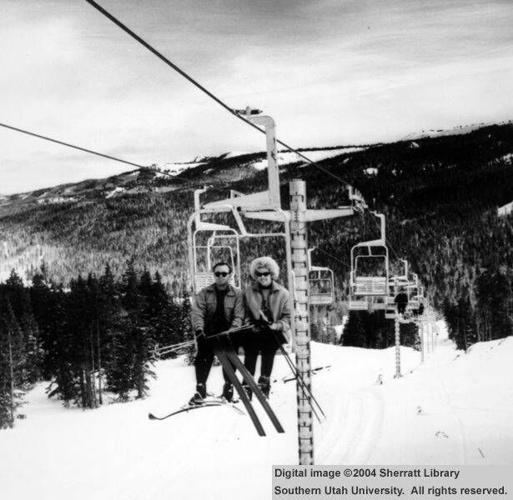
The first ski lift at Brian Head was constructed in 1964, and the resort officially opened in January 1965.
Opening Season: Brian Head Resort Is Born (1964–1966)
Winter 1964-65 marked the transformation of range-land into resort. Brian Head Resort officially opened to the public in January 1965, becoming Utah’s southernmost ski destination and one of the highest-base-elevation resorts in the country.
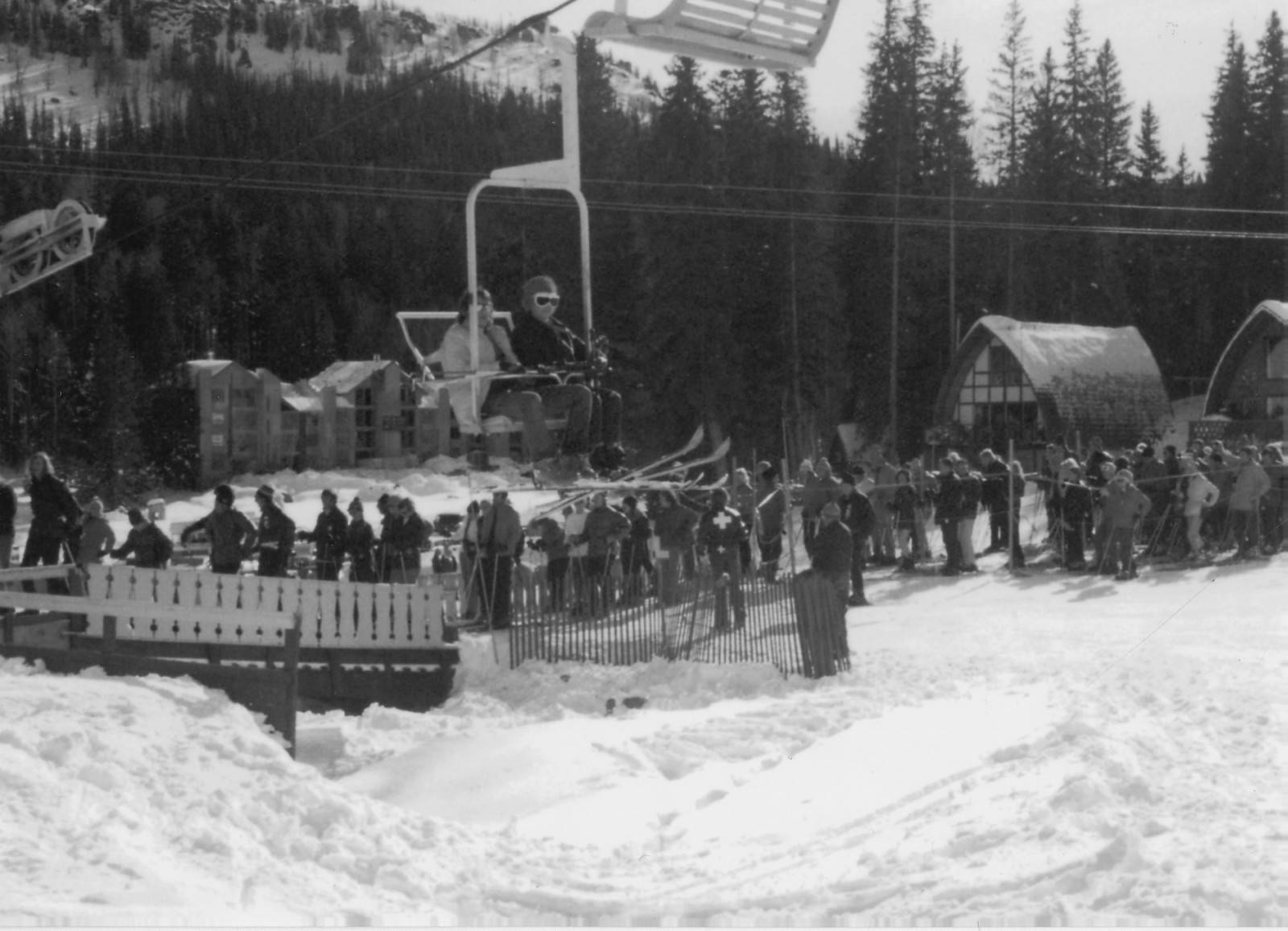
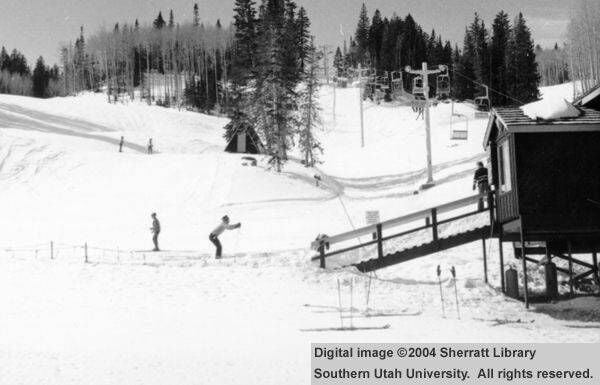
The infrastructure was modest by any standard. A single chairlift offered roughly 700 vertical feet of skiing. A 300-foot T-bar served beginners.
The warming house provided basic shelter, while mobile homes handled restroom and food service duties.
The first two permanent buildings in town were Georg Hartlmaier’s rental shop and a clinic owned by Dr. David Wilkerson—essential services for a ski area operating at 9,600 feet.
To build local interest, the resort launched a Saturday morning ski program designed to familiarize Iron County youth with the sport.
For just $6 per month, young skiers could learn the basics from trained instructors—an initiative that helped create the family-friendly culture Brian Head maintains today.
In 1966, Dr. Ray Cloward became President and general manager of Brian Head Corporation. His focus shifted to infrastructure: installing running water systems, telephone lines, and power service.
The Brian Head Inn expanded under his leadership, transforming the resort from a day-trip destination into a place where visitors could actually stay overnight.

Early Brian Head vs. Modern Brian Head: A Quick Comparison
| Aspect | 1965 Opening Season | Today |
|---|---|---|
| Lifts | 1 chairlift, 1 T-bar | Multiple lifts including high-speed quads |
| Vertical Drop | ~700 feet | 1,320+ feet |
| Amenities | Mobile homes, warming hut | Full-service lodges, restaurants, rental shops |
| Lift Ticket Cost | A few dollars | Competitive with other Utah ski resorts |
| Terrain | Basic runs | Varied terrain including terrain parks, night skiing |
Expansion, Giant Steps, and Town Incorporation (Late 1960s–1970s)
Strong snow years and growing regional interest drove rapid expansion by the end of the 1960s. What began as a single-lift operation was about to become something much more significant.
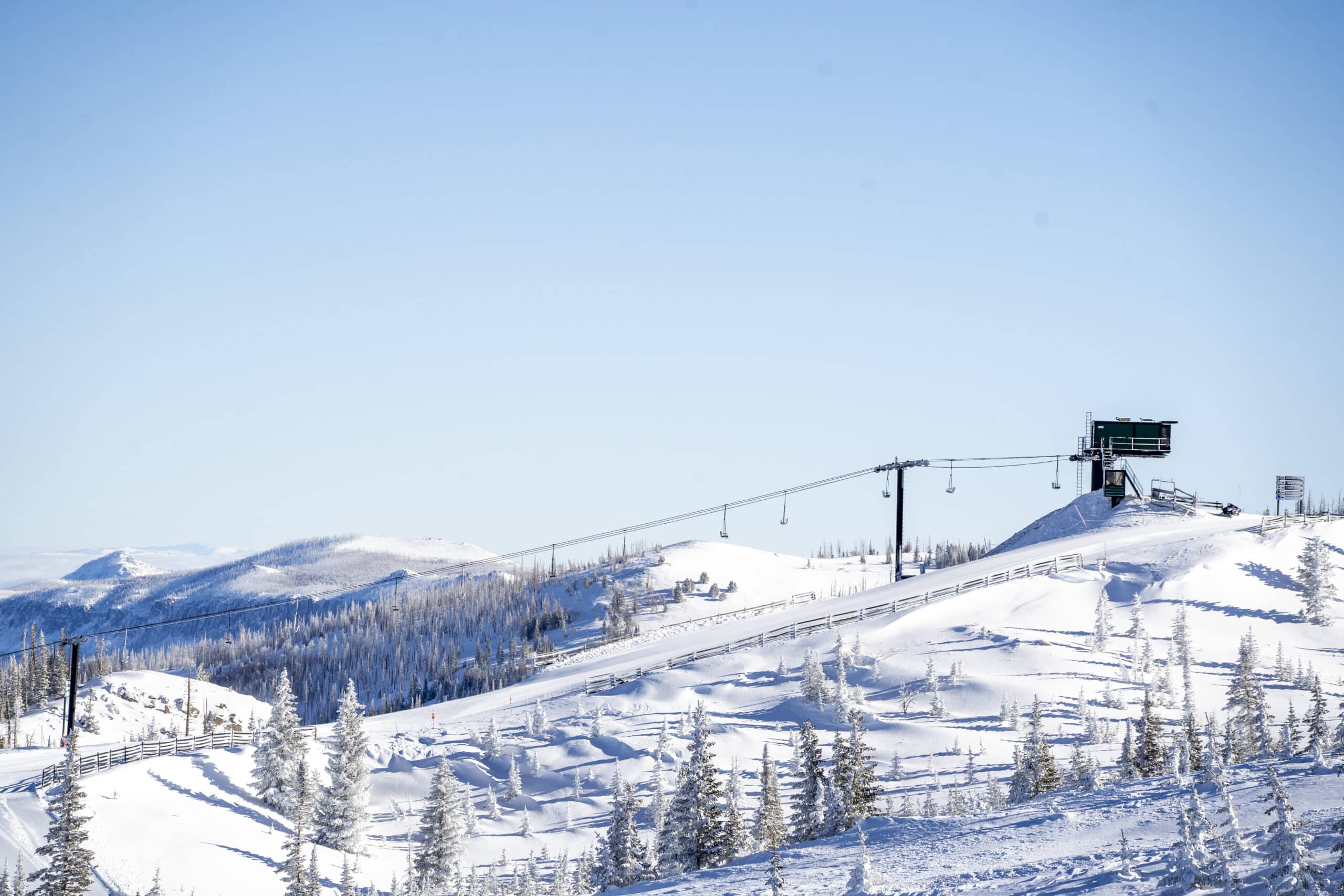
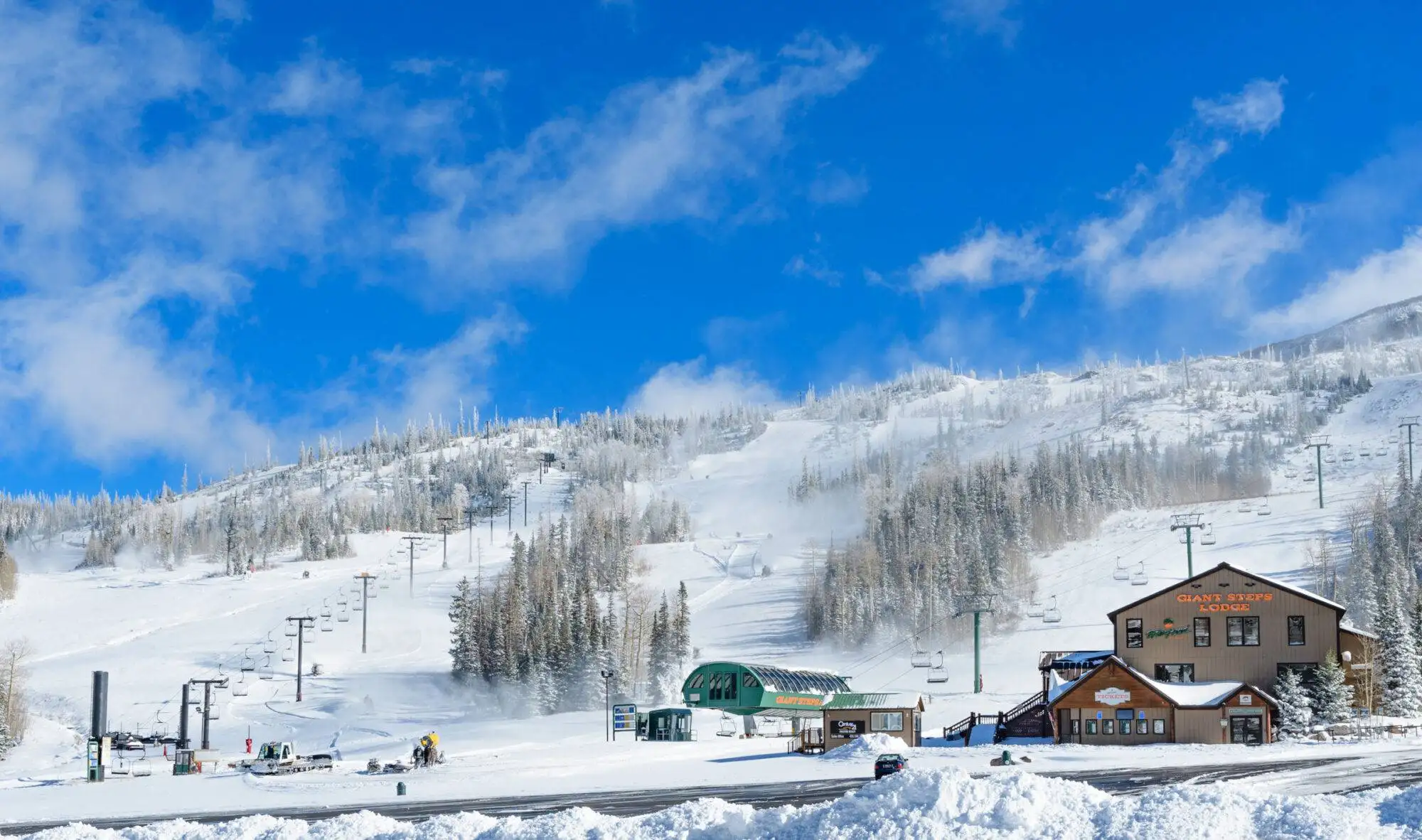
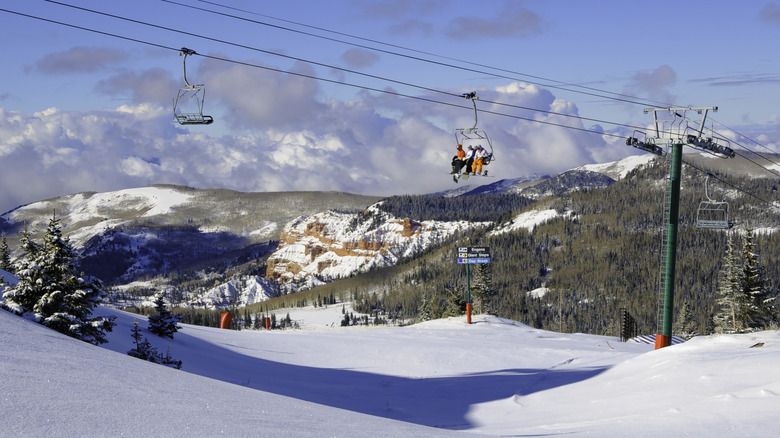
The 1969-70 season brought the installation of the Giant Steps lift—a 1,190-vertical-foot chairlift installed running east across the highway from the original base area.
This lift could handle 900 skiers per hour, dramatically increasing capacity and opening more advanced terrain.
The two-mountain feel that defines Brian Head today—with Navajo on one side and Giant Steps on the other—began to take shape.
Growth created complexity. In 1971, Brian Head Enterprises formed under new ownership arrangements, though legal disputes with the original Brian Head Corporation slowed some development.
Subdivision land sales played a key role in the area’s development, with land being sold and developed into condominiums and residential areas to promote tourism and establish a community around the ski resort.
These organizational challenges wouldn’t fully resolve until a settlement agreement in 1977, a reminder that building a ski resort in remote southern Utah required patience as well as vision.
The most significant milestone of this era came on March 12, 1975, when the town of Brian Head officially incorporated as a municipality in Iron County to support the growing ski resort.
Rex Emenegger served as the first mayor, with a council that included Jeff Thayer, Craig Morrill, Don Van Sickle, and Don Coffer.
The tiny permanent population—just a few dozen residents—needed formal governance to support growing infrastructure demands.
Early town challenges included negotiating landfill agreements with Iron County and Parowan, securing water rights, and operating a post office on a budget capped at $1,100 due to the costs of hauling mail up the mountain.
Today, Brian Head maintains three municipal buildings—Town Hall, a public works maintenance shop, and a public safety facility—to serve residents and the thousands of annual visitors.
From Simple Ski Area to Four-Season Resort (1980s–1990s)
The 1980s and 1990s transformed Brian Head from a winter-only destination into a year-round mountain escape. This evolution would prove crucial for the town’s economic survival and growth.
Brian Head was among the early Utah resorts to actively welcome snowboarders when the sport exploded in popularity during the late 1980s and early 1990s.
While some established resorts initially banned snowboarding, Brian Head embraced the new wave of riders streaming up from Las Vegas, southern California, and Arizona.
This openness helped establish the resort’s reputation as accessible and unpretentious.
Key Resort Additions in the 1980s and 1990s
Key additions during this era expanded the resort’s appeal:
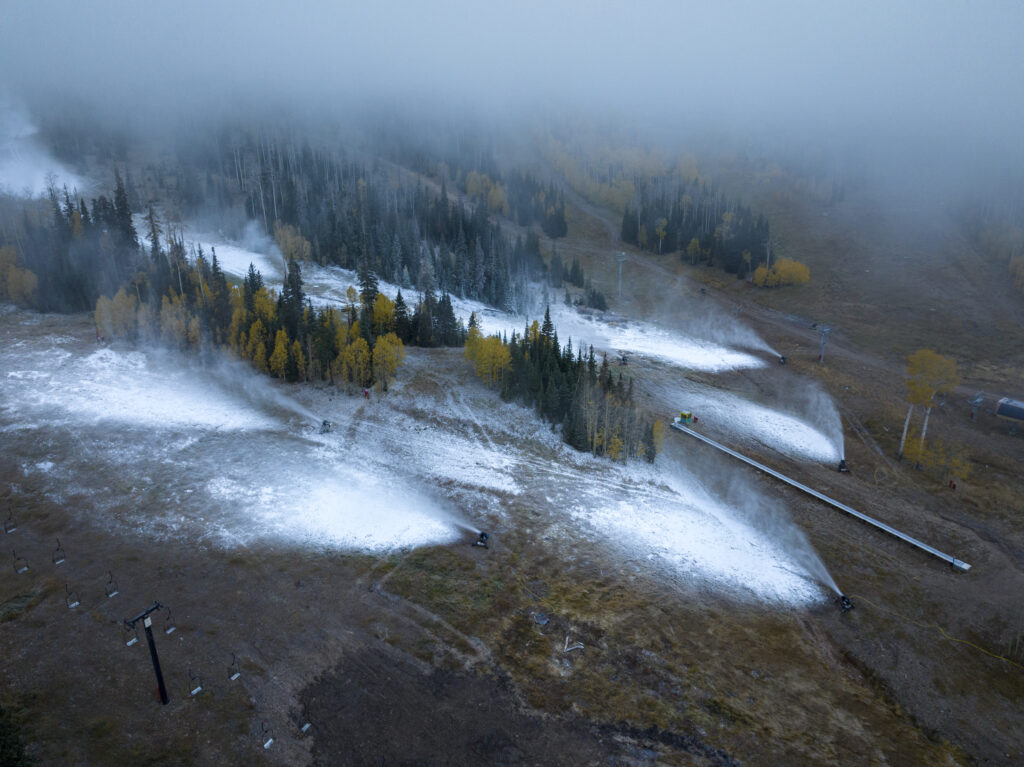
- Expanded snowmaking systems ensured consistent early-season coverage
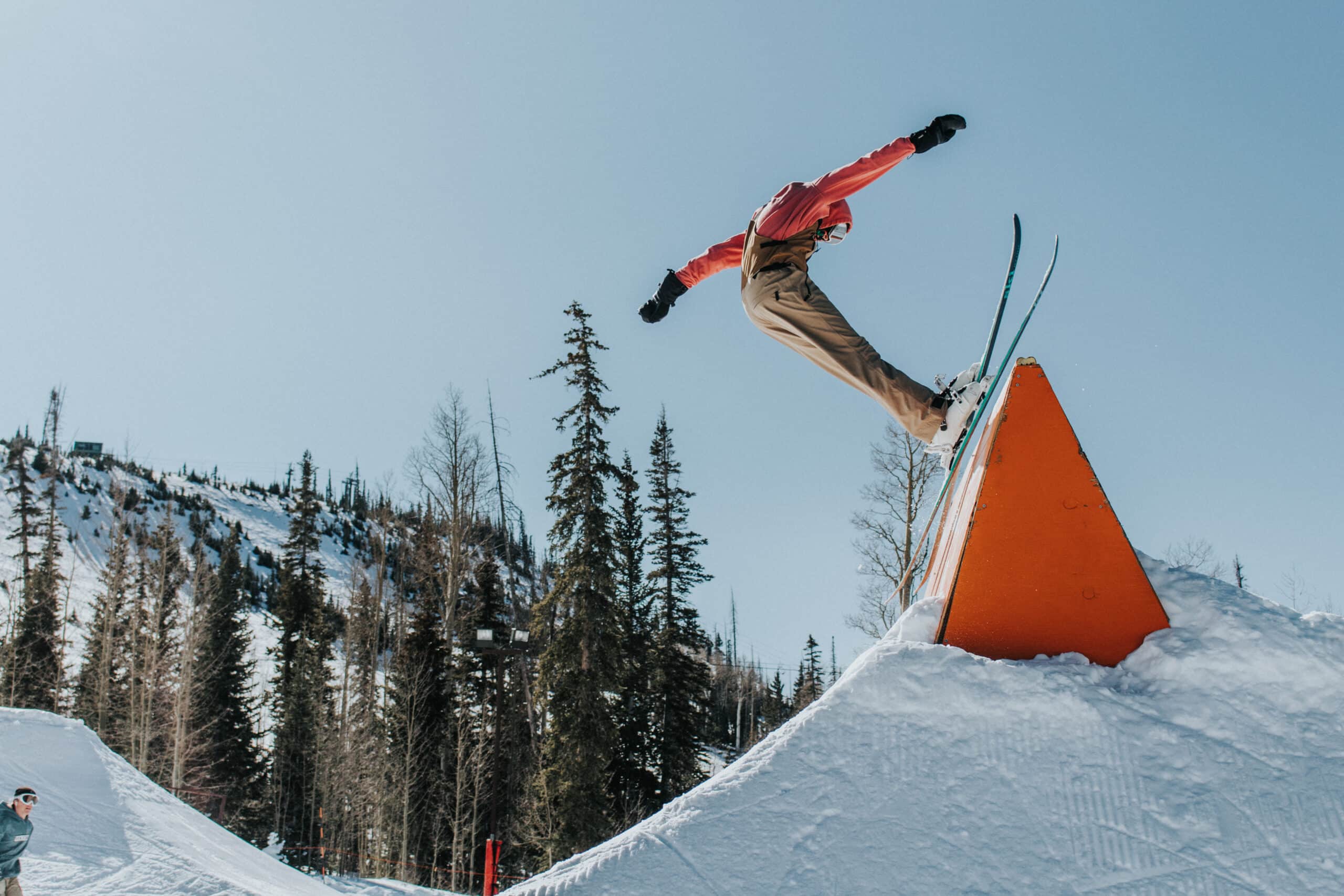
- Terrain parks and a halfpipe attracted freestyle skiers and snowboarders
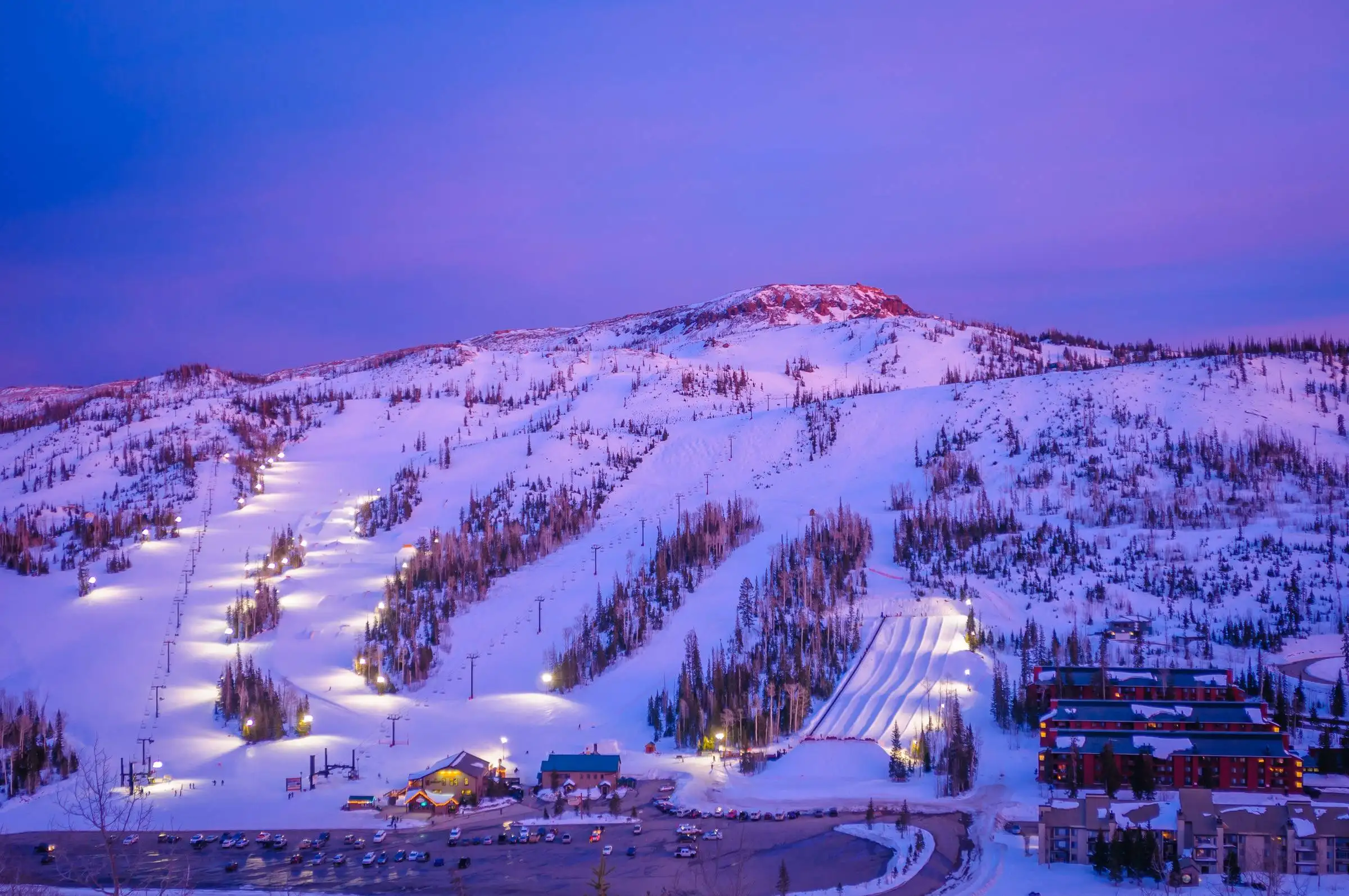
- The Brian Head Tube Park (late 1990s) offered snow tubing for families and non-skiers
- Lift-served mountain biking trails created summer revenue streams
- Night skiing on select runs extended the ski day for visitors staying in town
Lodging diversified significantly. Condos and cabins multiplied across the mountain, family-owned motels appeared in town, and properties in nearby areas began shaping the regional lodging landscape.
Visitors could now choose between rustic cabin stays and more developed hotel options.
Brian Head vs. Larger Wasatch Resorts (1990s Perspective)
| Pros of Brian Head | Cons of Brian Head |
|---|---|
| More affordable lift tickets | Smaller vertical drop |
| Shorter lift lines, less crowded | Fewer dining/nightlife options |
| Easier drive from Las Vegas, Arizona | Longer drive from Salt Lake City |
| Family-friendly, laid-back atmosphere | Less extensive trail network |
| Early embrace of snowboarding | Limited lodging variety (at the time) |
Modern Ownership, Upgrades, and the 21st-Century Resort (2000s–Present)
Recent Ownership Changes
The 21st century brought new ownership, substantial investment, and technological improvements that positioned Brian Head as a modern destination while preserving its approachable character.
In 2012, John Grissinger purchased Brian Head Resort and launched a multi-million-dollar investment program exceeding $16 million.
The focus: upgrading aging infrastructure while expanding terrain and amenities. This wasn’t just skiing anymore—it was building a complete mountain experience.
Mountain Capital Partners acquired Brian Head Resort in 2019, integrating it into a portfolio of Southwest resorts.
This brought expanded season pass options, including Power Pass products and reciprocal access to partner mountains—a significant value for frequent skiers.
Infrastructure Upgrades
Specific lift projects modernized the on-mountain experience:
- 2014: Upgraded Giant Steps chairlift improved access to intermediate and advanced terrain
- 2019: Installation of the high-speed Navajo Express quad dramatically reduced wait times and improved beginner/family access
- Ongoing: Snowmaking and grooming equipment updates ensure consistent conditions
Year-Round Resort Programming
The resort significantly expanded its summer and year-round programming:
- Terrain parks continue to evolve with new features
- Mountain biking trails now attract riders from across the region
- Summer concerts, festivals, and events (including fireworks and drone shows for anniversary celebrations) create reasons to visit beyond ski season
- The ski Utah passport and regional pass products make Brian Head more accessible than ever
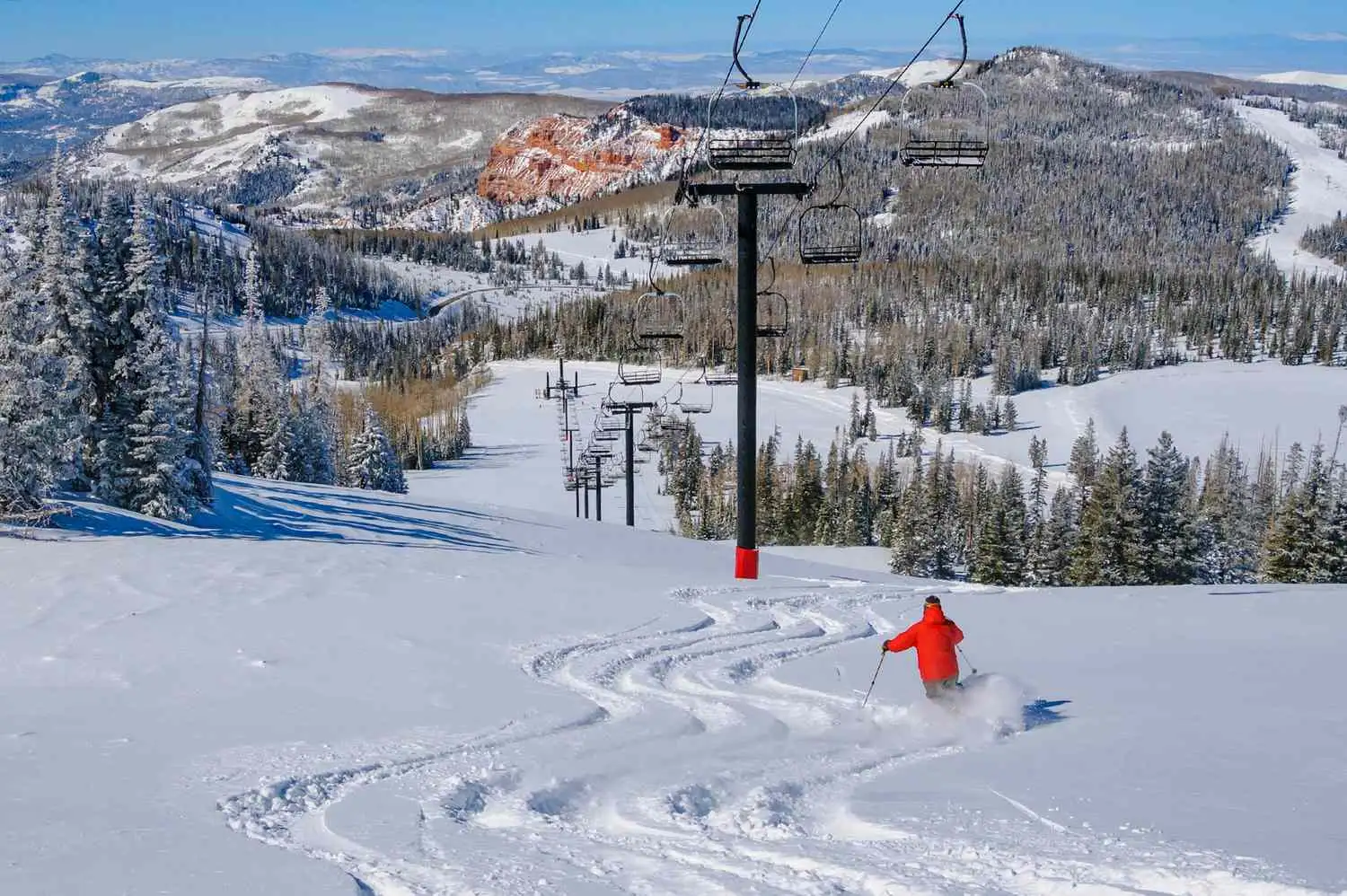
With approximately 360 inches of annual snowfall and modern lift infrastructure, today’s Brian Head offers a dramatically different experience than the single-chairlift operation of 1965—while maintaining the uncrowded, family-friendly atmosphere that has always defined the mountain.
Then vs. Now: Brian Head’s Evolution
| Feature | 1965 | 2024 |
|---|---|---|
| Population | ~0 permanent residents | 151 (2020 census) |
| Lifts | 2 (chair + T-bar) | Multiple including high-speed quad |
| Summer Activities | None (grazing land) | Mountain biking, hiking, festivals |
| Lodging Options | Mobile homes, basic inn | Full-service hotels, condos, luxury cabins |
| Pass Products | Daily tickets only | Season passes, multi-resort options |

Brian Head Town Today: Lodging, Lifestyle, and Community
Brian Head stands as one of Utah’s smallest incorporated towns by population—just 151 residents according to the 2020 census, up from 83 in 2010—yet boasts one of the largest concentrations of on-mountain lodging in southern Utah.
Community Amenities
Current town amenities support both year-round residents and seasonal visitors:
- Restaurants and bars ranging from casual to upscale
- Small grocery and market options for stocking cabin kitchens
- Gear shops and rental outlets including establishments descended from early pioneers like Georg’s operation
- Municipal services including a post office, Town Hall, and public works facilities
- Cross country skiing and snowshoeing access to surrounding Dixie National Forest terrain
Brian Head is also located near Dixie National Park, making it a convenient base for exploring the region’s scenic red rock formations and outdoor attractions.
Lodging Options and Atmosphere
The lodging mix reflects decades of development.
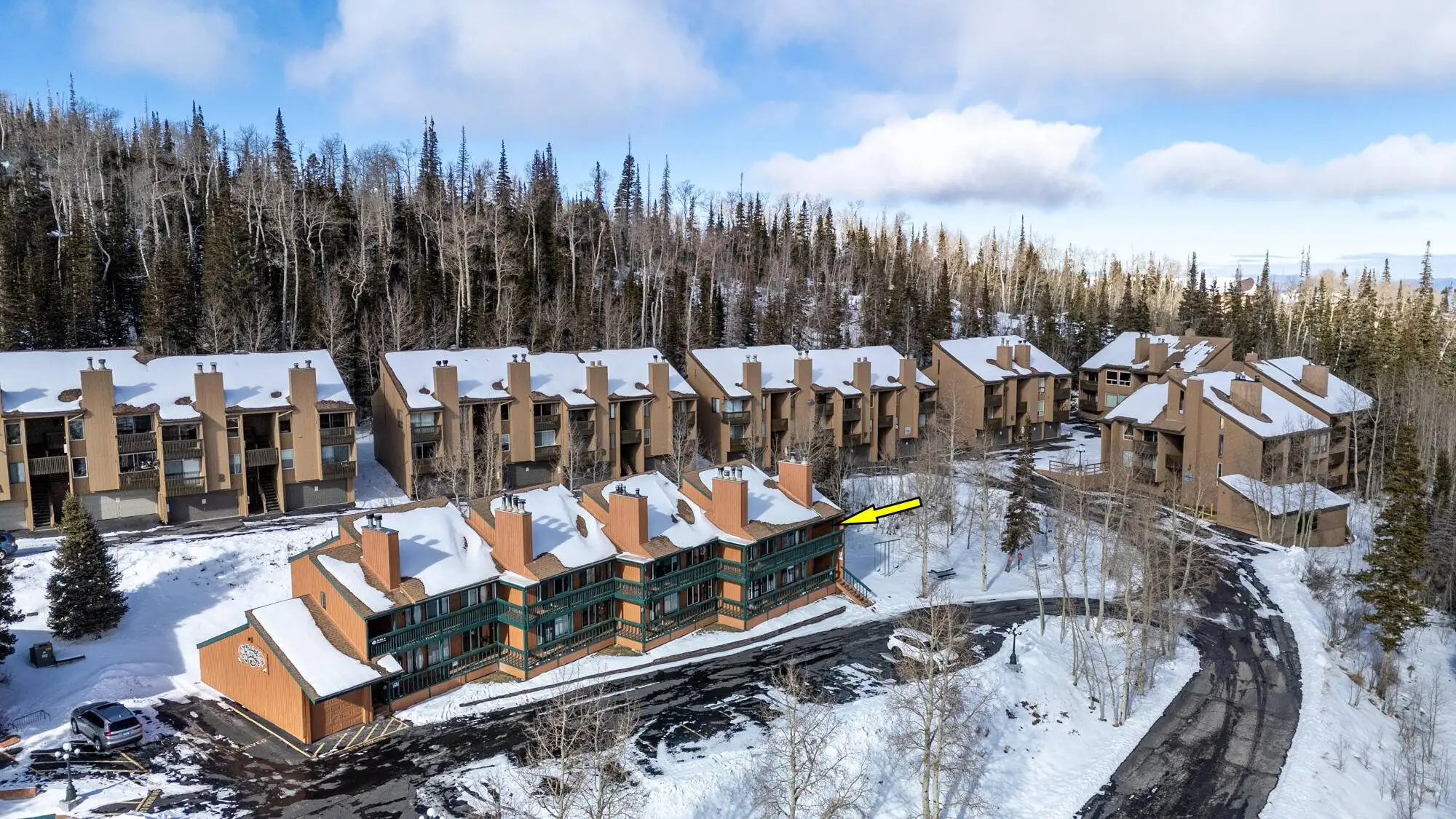
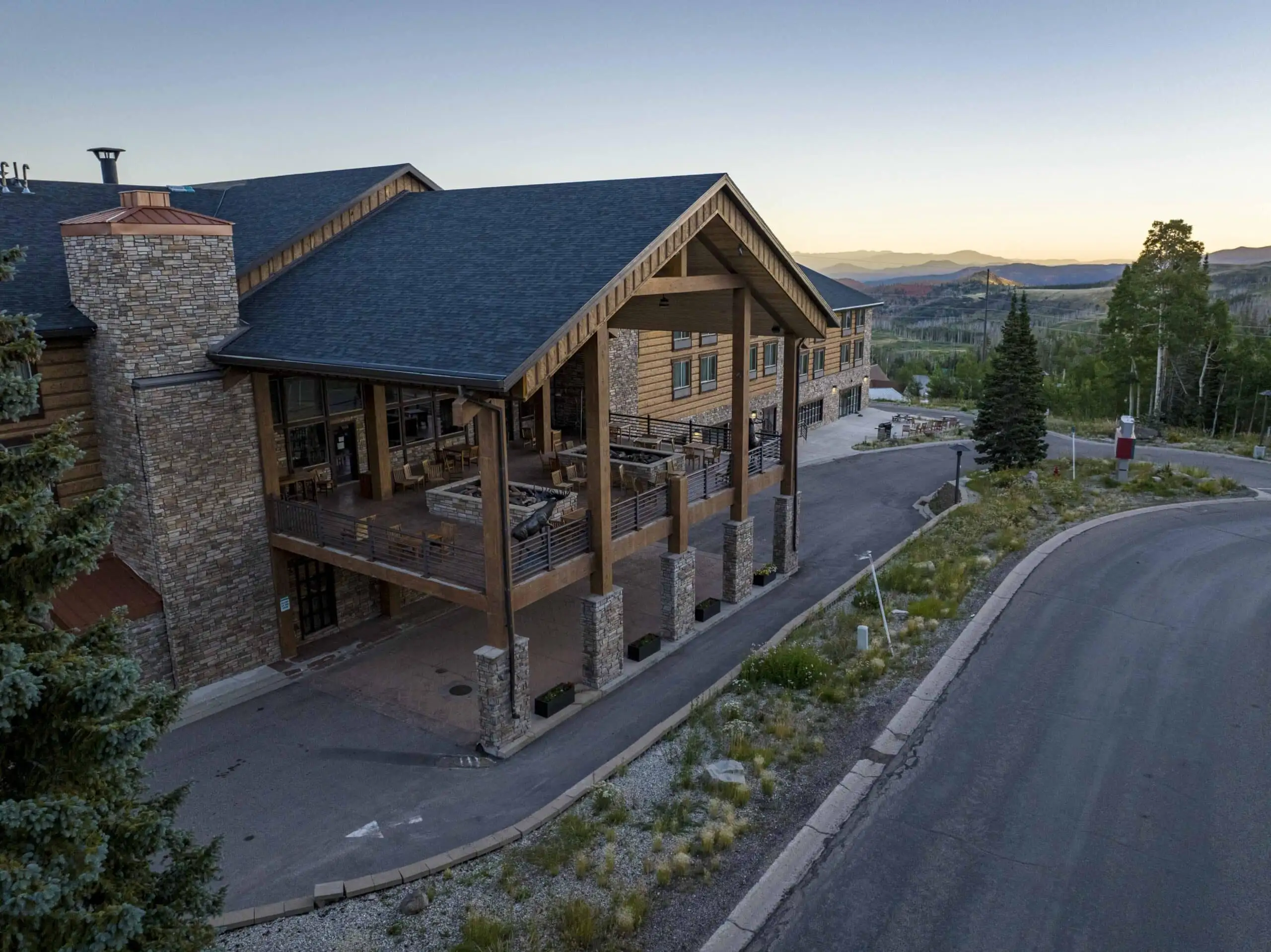
Brian Head Lodge serves as the flagship hotel near the slopes, offering ski-in/ski-out convenience. Hotels and inns dot the town, condos cluster near Giant Steps and Navajo lifts, and standalone cabins and luxury homes provide privacy in forested settings.
At Brian Head Hotels, we aggregate these options to help visitors compare and book the perfect accommodation for their needs.
Staying Slopeside vs. Nearby Communities
| Factor | Brian Head Town | Cedar City/Parowan |
|---|---|---|
| Convenience | Walk to lifts, ski-in/ski-out options | 30-45 minute drive to slopes |
| Cost | Higher lodging rates | More budget options available |
| Dining/Nightlife | Limited options | More restaurants, shops |
| Atmosphere | Quiet mountain village | Small-town amenities |
| Best For | Maximizing ski time, families with kids | Budget travelers, those wanting variety |
Brian Head’s Place in Utah Ski History
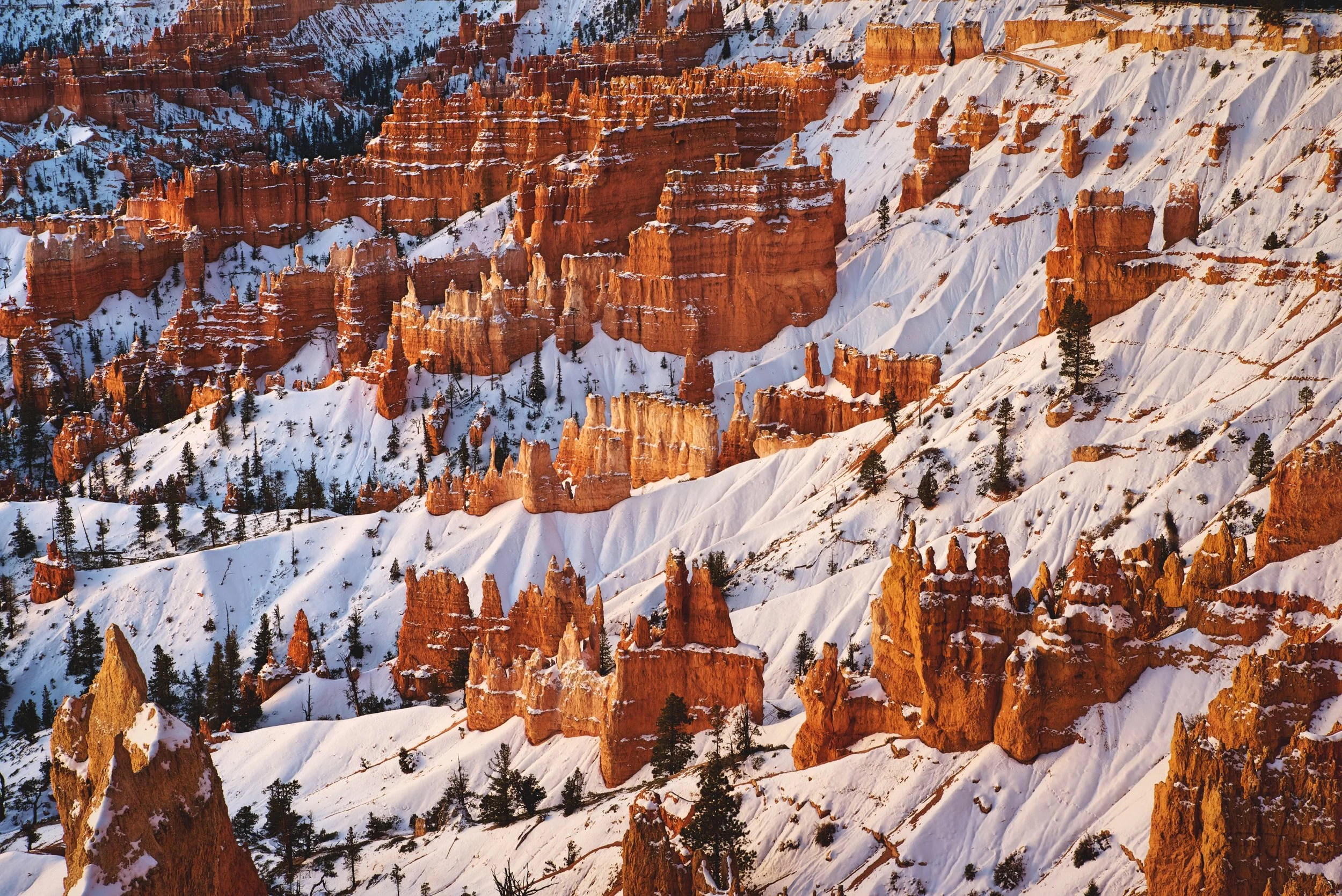
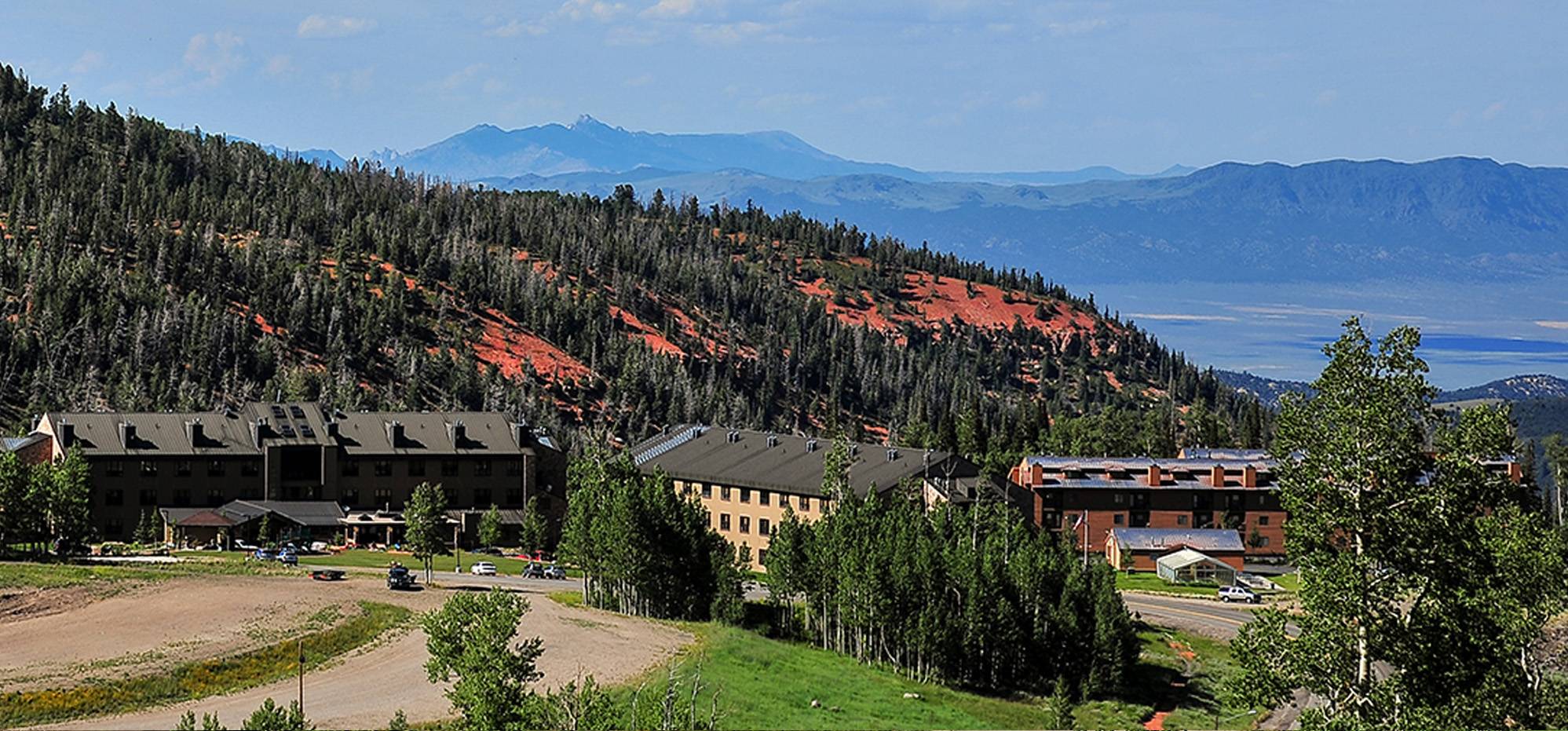
Within the broader story of Utah ski resorts, Brian Head occupies a unique position: the southernmost ski destination in the state, the highest base elevation at 9,600 feet, and the only resort where red rock formations create a backdrop unlike anything in the Wasatch.
Brian Head by the Numbers
| Metric | Brian Head | Utah Average (Major Resorts) |
|---|---|---|
| Base Elevation | 9,600 ft | 7,500-8,500 ft |
| Annual Snowfall | ~360 inches | 400-500 inches |
| Drive from Las Vegas | ~3 hours | 6+ hours (to Wasatch) |
| Crowd Levels | Low to moderate | Moderate to high |
| Lift Ticket Cost | Budget-friendly | Premium pricing |
While Brian Head offers less vertical than the giants near Salt Lake City, it consistently ranks high for value, family friendliness, and uncrowded slopes.

For visitors from Las Vegas, southern California, and Arizona, the drive time advantage is significant—three hours versus six or more to reach the Wasatch Front.
Notable milestones in Utah ski history tied to Brian Head:
- 1965: Opening as Utah’s southernmost ski resort
- Late 1980s: Early embrace of snowboarding culture
- 1990s: Development of tube parks and terrain parks
- 2000s-present: Evolution of summer mountain biking programs
- Recent years: Forest Service approval of expansion plans that could potentially quadruple terrain
The resort’s proximity to Bryce Canyon National Park, Zion National Park, and Cedar Breaks National Monument positions it as part of a larger southern Utah travel itinerary.
Many visitors combine ski days with national park exploration, especially during shoulder seasons when lower-elevation parks offer pleasant hiking while Brian Head maintains snow coverage.
From Past to Powder Days: Why History Matters When You Book
From Indigenous hunters traversing high meadows to pioneer ranchers escaping summer heat to Burt Nichols dreaming of chairlifts—Brian Head’s story is one continuous narrative of people drawn to this remarkable plateau.
Understanding this history enriches every aspect of a stay. Guests ski runs first cut by Georg Hartlmaier in the early 1960s. They walk streets that were once summer grazing meadows for the Adams family’s livestock.
They lodge near sites where Minnie’s Mansion once hosted late-night dances for Iron County cowboys. The cool mountain air that drew ranchers a century ago still draws visitors today.
For Historically Minded Visitors: Practical Tips
- Ride the Giant Steps lift and imagine the meadows as they appeared before the 1969-70 installation
- Visit Cedar Breaks National Monument for views that early surveyors—possibly those connected to John Wesley Powell’s expeditions—first mapped
- Explore interpretive displays and historical museums in nearby Parowan or Cedar City for deeper regional context
- Look for old lift infrastructure and original trail alignments that reveal the resort’s evolution
- Ask longtime locals about memories of the mountain—many families have multi-generational connections
The next chapter of Brian Head’s history is being written right now. Forest Service plans could dramatically expand terrain.
Population continues to grow. Lodging options multiply each year. Visitors who book today become part of a story that stretches back centuries.
Planning Your Stay: Using Brian Head’s History to Choose Lodging
The resort’s evolution from range-land to ski town created distinct lodging zones, each with its own character and advantages. Understanding this geography helps visitors choose accommodations that match their priorities.
Lodging Clusters and Their Character:
- Near Giant Steps: Best for terrain park enthusiasts and advanced skiers seeking quick access to steeper runs; the original expansion area from 1969-70
- Near Navajo: Family-friendly zone with ski school access and beginner terrain; developed later with families specifically in mind
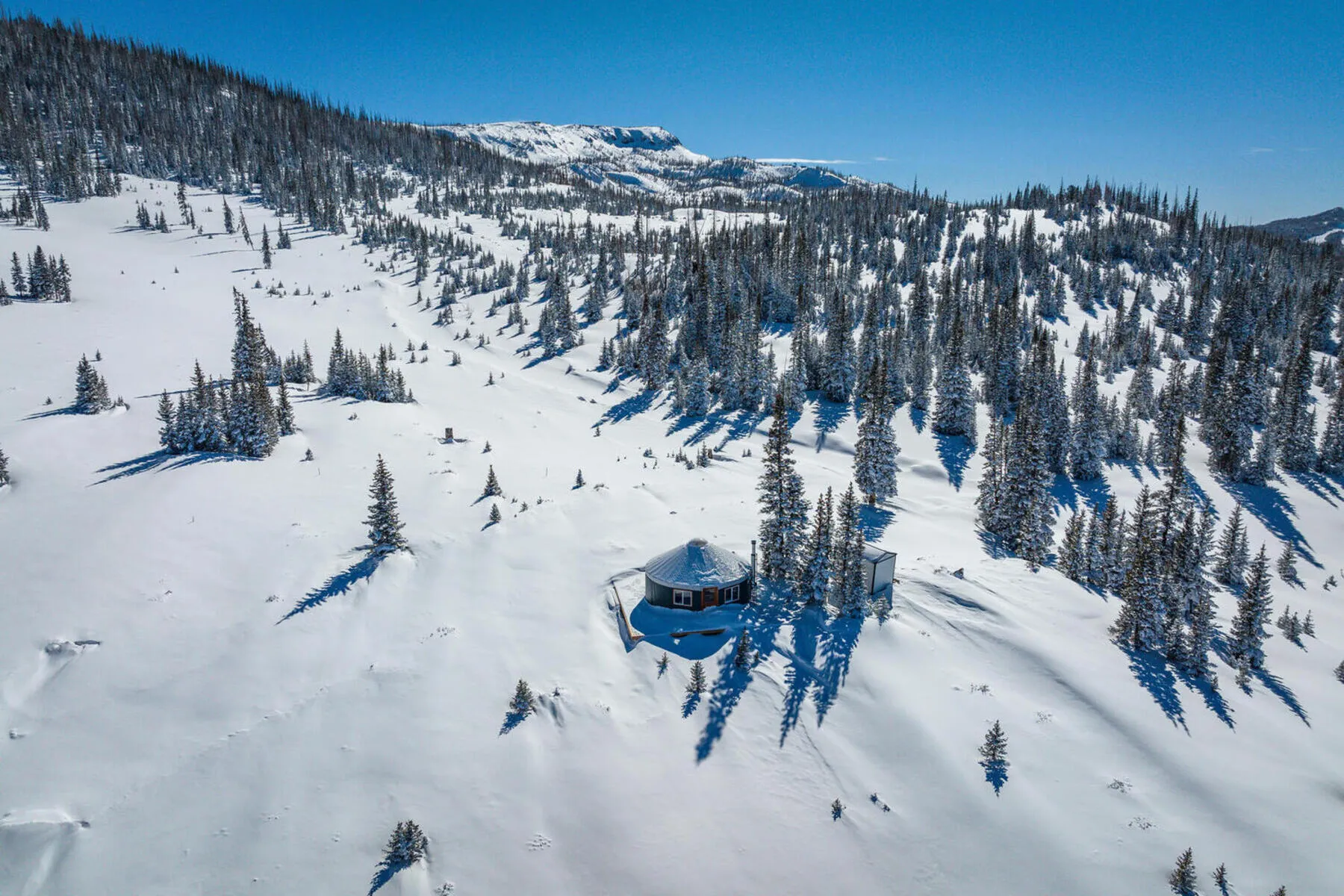
- Forested Cabin Zones: Quieter settings with views toward Cedar Breaks; appeals to those seeking privacy and a true mountain property experience
Lodging Type Comparison
| Type | Pros | Cons | Best For |
|---|---|---|---|
| Hotels (e.g., Brian Head Lodge) | On-site amenities, daily housekeeping, restaurant access | Less space, higher nightly rates | Couples, short stays, convenience seekers |
| Condos | Kitchen facilities, more space, often slope-side | May lack hotel services | Families, groups, longer stays |
| Private Cabins/Luxury Homes | Maximum privacy, full kitchens, unique character | Further from lifts, self-service | Large groups, special occasions, those wanting seclusion |
Our platform curates options across all these zones, with filters for ski access, pet-friendly status, hot tubs, and amenities that matter to modern travelers.
From properties near where the first chairlift once turned to newer developments in the Aspen Meadows area, the range reflects Brian Head’s growth from a single-lift operation to a complete mountain community.
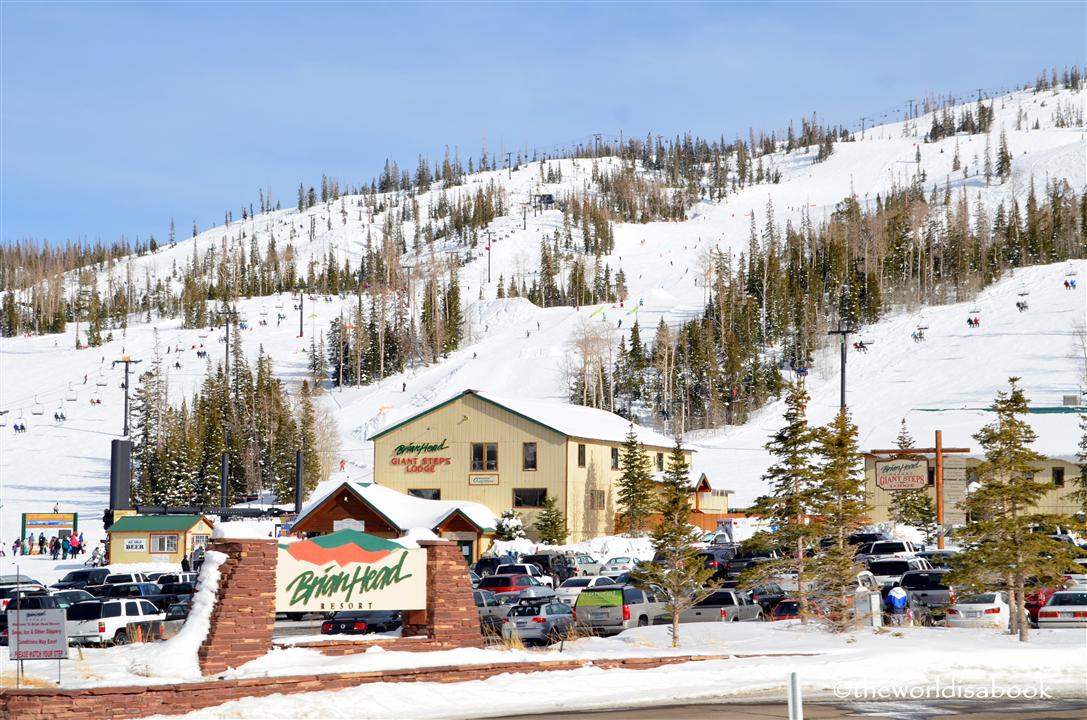
Whether you prefer the convenience of a slopeside hotel or the privacy of a cabin tucked among the pines, today’s Brian Head offers accommodations that would astonish those original visitors who stayed in mobile homes and warming huts back in 1965.
Check current deals and packages to find the perfect fit for your mountain getaway.
Key Events in Brian Head History
| Year/Period | Event |
|---|---|
| Pre-1800s | Fremont Tribe discovery; area used as Indigenous hunting grounds |
| Pre-1900s | Known as Monument Peak and Bear Flats |
| Mid-1800s | Settled by pioneers, Adams family establishes “Little Ireland” grazing area |
| 1964 | Brian Head Corporation founded by Burt Nichols and Homer Vasels |
| 1964 | First ski lift constructed |
| January 1965 | Resort officially opens with 700-vertical-foot chairlift and T-bar |
| 1969-1970 | Giant Steps lift (Chair #2) added, expanding terrain |
| 1975 | Town of Brian Head incorporated to support growing ski resort |
| 1990 | Resort adds snowmaking technology and terrain parks for snowboarders |
| 2012 | Purchased by John Grissinger; $16+ million invested in infrastructure |
| 2019 | Mountain Capital Partners agreement to purchase resort |
| Present | Resort features 71 runs and 650 skiable acres; receives over 356 inches of snowfall |
| Ongoing | Aspen Meadows development aims to double town size and expand terrain by 380 acres |